Convection vs. Conventional Toaster Ovens: What Changes the Results
- How Conventional Toaster Ovens Work
- Typical characteristics of conventional toaster ovens:
- How Convection Toaster Ovens Work
- Typical characteristics of convection toaster ovens:
- Key Differences That Change the Cooking Results
- 1. Heat Distribution
- 2. Cooking Time
- 3. Browning and Crispiness
- 4. Energy Efficiency
- 5. Temperature Accuracy
- 6. Moisture Control
- 7. Best Use Cases
- Effects on Different Types of Foods
- Baked Goods
- Roasted Meats
- Vegetables
- Frozen Foods
- Bread and Toast
- Performance Comparison Table
- Top 10 Toaster Ovens Compared: Prices, Pros, Cons, Reviews
- Comparison Table
- Detailed Product Reviews with Real Impressions
- 1. Breville Smart Oven Pro
- Pros
- Cons
- User Impressions
- 2. Ninja Foodi SP101
- Pros
- Cons
- User Impressions
- 3. Panasonic FlashXpress
- Pros
- Cons
- User Impressions
- 4. Cuisinart TOB-260N1
- Pros
- Cons
- User Impressions
- 5. Hamilton Beach 31344D
- Pros
- Cons
- User Impressions
- 6. COSORI CS100-AO
- Pros
- Cons
- User Impressions
- 7. KitchenAid KCO255BM
- Pros
- Cons
- User Impressions
- 8. Black+Decker TO3250XSB
- Pros
- Cons
- User Impressions
- 9. Galanz Combo Oven
- Pros
- Cons
- User Impressions
- 10. Oster French Door Oven
- Pros
- Cons
- User Impressions
- Which Technology Works Better for Your Cooking Style
- Convection is ideal for:
- Conventional is ideal for:
- Optimizing Results in Both Types
- For Convection:
- For Conventional:
A toaster oven is one of the most versatile tools in the kitchen. It warms leftovers, bakes small batches of cookies, reheats pizza, makes crispy toast, supports air-frying functions, and even replaces a full-size oven for many everyday tasks. The modern market offers two core technologies: conventional toaster ovens and convection toaster ovens. Although they look similar from the outside, the internal heating method produces very different results.
Understanding how these appliances circulate heat, manage temperature, and cook food helps improve consistency, reduce burning, and achieve more professional-quality results at home. Each technology serves a purpose and fits a different style of cooking. Conventional toaster ovens heat from stationary elements, while convection ovens add a fan that distributes hot air evenly. This changes cooking time, browning, texture, moisture retention, and crispiness.
Below is a complete and practical guide that explains how these two systems differ, how they influence cooking quality, and what to expect when choosing between them. With detailed comparisons, real user impressions, and product reviews, this guide helps select the best toaster oven for your needs.
How Conventional Toaster Ovens Work
Conventional toaster ovens rely on heating elements located at the top and bottom. These elements warm the air inside the oven cavity, and food cooks through radiant heat. The temperature rises steadily, but warm air does not actively circulate. As a result, heat can accumulate unevenly, creating warm and cool zones inside the oven.
Typical characteristics of conventional toaster ovens:
-
Heat radiates from fixed elements
-
No internal fan
-
Longer cooking time
-
More temperature fluctuation
-
Better for simple tasks like toasting, warming, and basic baking
Because the hot air settles naturally, thicker foods may not brown evenly. Cookies bake well, but roasts might cook unevenly unless repositioned during cooking.
How Convection Toaster Ovens Work
Convection toaster ovens add a built-in fan that circulates hot air around the food. This forced-air movement shortens cooking time, reduces hotspots, and helps achieve crispier textures.
Typical characteristics of convection toaster ovens:
-
Even heat distribution
-
Faster cooking time
-
Crispier and more uniform browning
-
Better moisture reduction for roasting
-
Excellent for air frying, baking, roasting, and dehydrating
The moving air keeps temperatures stable and consistent. Many users note that convection ovens produce restaurant-level crispness when baking chicken wings, potatoes, or vegetables.
Key Differences That Change the Cooking Results
1. Heat Distribution
-
Conventional: Static air, uneven zones
-
Convection: Constant circulating air, balanced heat
2. Cooking Time
-
Convection is approximately 20-25% faster
-
Conventional requires full cycle time
3. Browning and Crispiness
-
Convection provides superior browning
-
Conventional retains moisture
4. Energy Efficiency
-
Convection is more efficient due to shorter cook times
5. Temperature Accuracy
-
Convection often maintains more precise temperatures
6. Moisture Control
-
Moving air promotes drying and crisp textures
-
Still air keeps food slightly softer and moister
7. Best Use Cases
-
Convection shines in roasting, dehydrating, baking pastries
-
Conventional works well for reheating, simple sandwiches, and general warming
Effects on Different Types of Foods
Baked Goods
Convection ovens bake cookies more uniformly and help pastries puff evenly. However, delicate cakes may dry out.
Roasted Meats
Convection gives a crisp skin and faster cooking. Conventional ovens keep the inside more tender but may require longer time.
Vegetables
Convection produces roasted vegetables with caramelized edges. The airflow prevents steaming.
Frozen Foods
Pizza, fries, nuggets, and snacks crisp dramatically better in convection ovens.
Bread and Toast
Conventional ovens provide gentle heating, while convection creates crunchy crusts.
Performance Comparison Table
| Feature | Convection Toaster Oven | Conventional Toaster Oven |
|---|---|---|
| Cooking Speed | Faster | Slower |
| Heat Distribution | Even | Uneven |
| Crispiness | High | Moderate |
| Temperature Stability | Strong | Moderate |
| Best For | Roasting, baking, air frying | Toasting, reheating |
| Energy Use | Lower | Higher |
Top 10 Toaster Ovens Compared: Prices, Pros, Cons, Reviews
Ниже находятся наиболее популярные модели, подходящие для разных задач. Цены в долларах.
Comparison Table
| Model | Type | Price (USD) | Key Feature | Pros | Cons | User Feedback |
|---|---|---|---|---|---|---|
| Breville Smart Oven Pro | Convection | $279 | Even convection fan | Fast, accurate | Large footprint | Users love precision |
| Ninja Foodi SP101 | Convection | $219 | Air-fry capability | Multiple functions | Small interior | People praise crisp results |
| Panasonic FlashXpress | Conventional | $149 | Quartz heating | Fast warming | Limited capacity | Very popular for simplicity |
| Cuisinart TOB-260N1 | Convection | $199 | Dual cook | Powerful fan | Loud at high | Great for baking |
| Hamilton Beach 31344D | Conventional | $79 | Budget model | Good for toast | Lower durability | Users like value |
| COSORI CS100-AO | Convection | $199 | Smart controls | Excellent airflow | App not needed for all | Loved for versatility |
| KitchenAid KCO255BM | Convection | $199 | Even-Heat tech | Stylish, reliable | Heavy | Users appreciate even browning |
| Black+Decker TO3250XSB | Conventional | $89 | Extra-wide | Fits 9x13 pan | Uneven at times | Great space inside |
| Galanz Combo Oven | Convection | $129 | Air-fry + convection | Affordable combo | Noisy fan | Loved for price/performance |
| Oster French Door Oven | Convection | $299 | French-door design | Great capacity | Large size | Users like the premium feel |
Detailed Product Reviews with Real Impressions
1. Breville Smart Oven Pro
Price: $279
Type: Convection
A premium-quality toaster oven with an efficient heating system and an advanced fan. It excels in baking, roasting, and broiling.
Pros
-
Highly accurate temperature
-
Strong convection airflow
-
Easy controls
Cons
-
Large size requires counter space
User Impressions
Many users love how consistently it bakes and how quickly it heats, describing it as a "mini professional oven."
2. Ninja Foodi SP101
Price: $219
Type: Convection
Known for crisping ability, this model flips up to save space.
Pros
-
Air fry function built in
-
Excellent crisping performance
-
Compact fold-up design
Cons
-
Interior height is limited
User Impressions
Users praise it for excellent crispy textures and quick heating.
3. Panasonic FlashXpress
Price: $149
Type: Conventional
Uses quartz elements for rapid cooking without a fan.
Pros
-
Very fast preheating
-
Perfect for toast and snacks
Cons
-
Small capacity
User Impressions
People love the simplicity and reliability for daily use.
4. Cuisinart TOB-260N1
Price: $199
Type: Convection
Versatile oven suitable for baking, roasting, and consistent browning.
Pros
-
Powerful convection
-
Large interior
Cons
-
Louder than some competitors
User Impressions
Users highlight its dependable performance and even heat distribution.
5. Hamilton Beach 31344D
Price: $79
Type: Conventional
Simple, budget-friendly toaster oven.
Pros
-
Affordable
-
Easy dial controls
Cons
-
Durability not as strong
User Impressions
People like it as a basic model for light tasks.
6. COSORI CS100-AO
Price: $199
Type: Convection
Offers smart control, good build quality, and wide functionality.
Pros
-
Strong airflow
-
Great for baking and air frying
Cons
-
App features optional
User Impressions
Users appreciate the consistency and modern interface.
7. KitchenAid KCO255BM
Price: $199
Type: Convection
Reliable heating performance with elegant exterior.
Pros
-
Balanced airflow
-
Stylish design
Cons
-
Heavy to lift
User Impressions
Many enjoy its accurate temperature and solid construction.
8. Black+Decker TO3250XSB
Price: $89
Type: Conventional
Extra-wide interior fits standard pans.
Pros
-
Big capacity
-
Simple operation
Cons
-
Heat distribution varies
User Impressions
Users like the value and the ability to cook larger dishes.
9. Galanz Combo Oven
Price: $129
Type: Convection
Offers air frying and multiple cooking modes.
Pros
-
Affordable multi-function oven
-
Strong convection airflow
Cons
-
Noisy at times
User Impressions
People praise the versatility and cost efficiency.
10. Oster French Door Oven
Price: $299
Type: Convection
Elegant French doors and large cooking space.
Pros
-
Eye-catching design
-
Large capacity
Cons
-
Requires significant space
User Impressions
Users enjoy the premium feel and consistent cooking results.
Which Technology Works Better for Your Cooking Style
Choosing between convection and conventional depends heavily on your cooking habits. People who want crispy textures, faster results, and improved baking performance benefit from convection ovens. Fans of gentle reheating, soft textures, and simplicity may prefer conventional designs.
Convection is ideal for:
-
Roasting meat and vegetables
-
Achieving crispy fries, wings, and pastries
-
Baking evenly browned cookies
-
Multi-rack cooking
-
Faster meal preparation
Conventional is ideal for:
-
Toasting
-
Simple reheating
-
Gentle baking
-
Budget kitchens
-
Compact, no-fan solutions
Many kitchens benefit from having convection capabilities due to improved efficiency and modern versatility.
Optimizing Results in Both Types
For Convection:
-
Reduce temperature by approximately 25°F for most recipes
-
Avoid overcrowding trays to allow airflow
-
Take advantage of faster browning cycles
For Conventional:
-
Rotate trays halfway through cooking
-
Allow extra time for dense foods
-
Preheat fully for better consistency
About this item
- Note: Kindly review the videos under the image section and user manual under product details for set up and user guidance
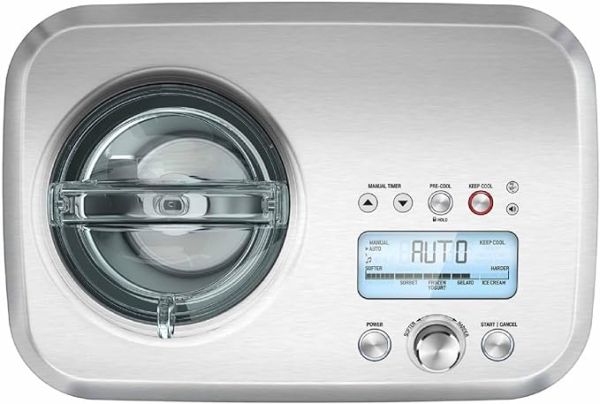
- 12 hardness settings; sorbet, frozen yogurt, gelato, and ice cream, Capacity 1.5 quart (1 Liter) bowl capacity
- Self refrigerating compressor: Voltage: 110 to 120 Volts Power: 165 watts
- Fully automatic or manual functionality: Keep cool setting for up to 3 hours
- Pre cool setting to optimal operating temperature